My days are spent on drones and defence systems. Cows are not in my job description. But animal disease detection keeps pulling my attention, because every hard problem in it is one I already work on, and the field gets a fraction of the engineering talent it deserves.
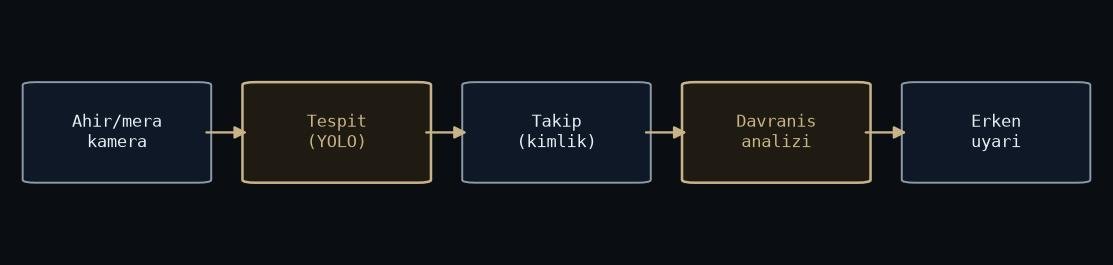
Figure: rendered by me.
This is not a project writeup. I have not shipped anything in this space. It is a case for why someone should.
The problems are familiar, the setting is not
Take lameness in dairy cattle. It is one of the most expensive health problems in the industry, and the early signal is a change in gait. Detecting a gait change is a tracking problem: follow an animal across frames, extract how it moves, compare against its own baseline. That is structurally the same pipeline we built for player and ball tracking in sports video, with a cow instead of a striker.
Or take inflammation and fever. Both show up as heat before they show up as behaviour, and heat is exactly what a thermal camera measures. Everything I wrote in thermal imaging basics applies here: udder inflammation, foot infections, febrile animals in a herd, all visible in the thermal channel days before a human would flag them.
Sick animals also eat less, move less, and separate from the group. Detection plus tracking plus a time series. Nothing exotic. The models are ordinary; the setting is what makes it hard.
The data is the real problem
A barn is a hostile place for a camera. Mud, dust, condensation, broken IR floodlights, animals that occlude each other constantly and, to a detector, mostly look identical.
Identity is the sharpest edge. Knowing “a cow limped” is nearly useless. Knowing “cow 47 limped today, and yesterday too” is the product. That means re-identification across days, under different lighting, on animals that change shape as they feed. Ear tags help, but you cannot read a muddy tag at night from a ceiling camera.
And the labels are expensive. You need veterinary judgement, not crowdworkers. Sick animals are rare in any healthy herd, so your classes are brutally imbalanced, which is exactly the regime where validation metrics flatter you. Everything from my dataset decisions post applies here with the volume turned up: a leaky split in this domain does not cost you a competition score, it costs a farmer a herd.
The hardware is the solved part
Here is the good news. A barn has no datacenter and usually has bad internet, and that is fine, because this workload fits on the edge. A Jetson-class board running an optimized model handles a full barn of cameras: the same deployment story as TensorRT and FP16, minus the weight and power constraints of putting it on an aircraft. Cameras are cheap. Thermal is the priciest sensor in the rack, and prices keep falling.
For once, the boring part of the pipeline is genuinely done. What is missing is people willing to spend time on the ugly data.
Why it is worth building in
The economics are real. Catching lameness or mastitis early is worth meaningful money per animal, and herd-level disease is catastrophic: outbreaks get resolved by culling. A system that flags ten animals for a vet to examine beats one person eyeballing five hundred, every single day.
The bar for useful is low and the competition is thin. Autonomous driving has thousands of teams; this field has a handful. If I were a young computer vision engineer choosing where to point a career, I would look here long before I looked at another chatbot wrapper.
The tools are ready. The problems matter. Somebody go build it.